

Agromorphological comparison of a durum wheat evolutionary population, a landrace, and a mixture of landraces in the northern of Morocco
Published 2026-06-29
Keywords
- Agroecology,
- wheat,
- genetic diversity,
- evolutionary population
How to Cite
Copyright (c) 2026 Widad Benziane, Younes Hmimsa, Cornelia Rumpel, Abad Chabbi, Abdelhalim Chmarkhi, Zineb Moudni, Abdelkader Benbelkacem, Salvatore Ceccarelli, Gianni Galaverna, Salama El Fatehi

This work is licensed under a Creative Commons Attribution 4.0 International License.




Abstract
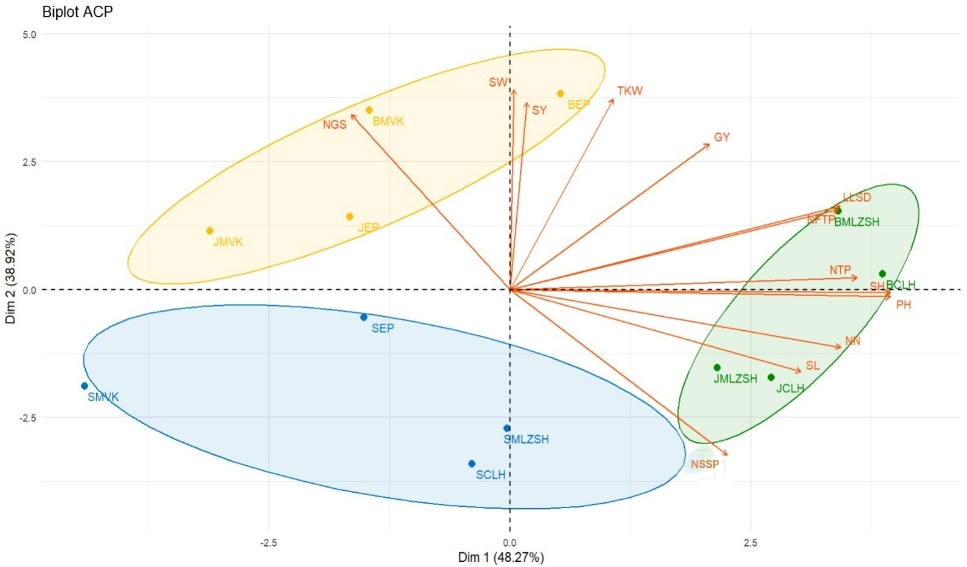
Durum wheat (Triticum turgidum ssp. durum Desf.) production faces challenges under increasing climate change, biodiversity loss, and the growing need for sustainable and resilient cropping systems. Choice of varieties adapted to local conditions may be of crucial importance to secure future productivity in particular in North African smallholder systems. This work aimed to evaluate the growth and the agronomic traits of four entries of durum wheat, including a common Moroccan landrace (CLH), a mixture of three landraces (MLZSH), an evolutionary population (EP), and a modern variety (MVK). The experiment was carried out over two consecutive growing seasons (2021/2022 and 2022/2023) in three different sites in northern Morocco (Jahjouka, Boujedyane, and Sahel). Analysis of variance revealed significant effects of genotype, location, and year on most traits, along with significant genotype × environment interactions, indicating differential responses among genotypes across environments. However, PCA distinguished three entry groups. Landraces and their mixture exhibited superior growth traits, including greater plant height, tillering capacity, and straw biomass. In contrast, EP and MVK, exhibited higher agronomic traits. Interestingly, the EP matched the agronomic performance of the modern variety, all while preserving moderate growth traits. These results highlight the potential of integrating genetically diverse materials, such as landraces and evolutionary populations, into agroecological strategies. This approach can enhance resilience, conserve genetic resources in situ, and support farmer seed autonomy. This study makes a significant contribution to the broader effort to promote sustainable wheat systems under environmental and socioeconomic constraints.
References
- Abobakr, H., Raji, M., Essabir, H., Bensalah, M. O., Bouhfid, R., & Qaiss, A. E. K. (2024). Enhancing oriented strand board performance using wheat straw for eco-friendly construction. Construction and Building Materials, 411, Articolo 135135. https://doi.org/10.1016/j.conbuildmat.2024.135135
- Abson, D. J., Fraser, E. D., & Benton, T. G. (2013). Landscape diversity and the resilience of agricultural returns: A portfolio analysis of land-use patterns and economic returns from lowland agriculture. Agriculture & Food Security, 2, Articolo 2. https://doi.org/10.1186/2048-7010-2-2
- Adhikari, S., Kumari, J., Jacob, S. R., Prasad, P., Gangwar, O. P., Lata, C., Thakur, R., Singh, A. K., Bansal, R., Kumar, S., Bhardwaj, S., & Subodh Kumar, S. (2022). Landraces potential treasure for sustainable wheat improvement. Genetic Resources and Crop Evolution, 69, 499–523. https://doi.org/10.1007/s10722-021-01310-5
- Alsabbagh, P., Gay, L., Colombo, M., Montazeaud, G., Ardisson, M., Rocher, A., Allard, V., & David, J. (2022). Diversity matters in wheat mixtures: a genomic survey of the impact of genetic diversity on the performance of 12 ways durum wheat mixtures grown in two contrasted and controlled environments. PLoS ONE, 17(12), Articolo e0276223. https://doi.org/10.1371/journal.pone.0276223
- Altieri, M. A. (1999). The ecological role of biodiversity in agroecosystems. Agriculture, Ecosystems & Environment, 74, 19–31. https://doi.org/10.1016/S0167-8809(99)00028-6
- Altieri, M. A., & Nicholls, C. I. (2013). The adaptation and mitigation potential of traditional agriculture in a changing climate. Climatic Change, 140, 33–45. https://doi.org/10.1007/s10584-013-0909-y
- Balfourier, F., Roussel, V., Strelchenko, P., Exbrayat-Vinson, F., Sourdille, P., Boutet, G., Koenig, J., Ravel, C., Mitrofanova, O., Beckert, M., & Charm, G. (2007). A worldwide bread wheat core collection arrayed in a 384-well plate. Theoretical and Applied Genetics, 114, 1265–1275. https://doi.org/10.1007/s00122-007-0517-1
- Barot, S., Allard, V., Cantarel, A., Enjalbert, J., Gauffreteau, A., Goldringer, I., Lata, J.-C., Le Roux, X., Niboyet, A., & Porcher, E. (2017). Designing mixtures of varieties for multifunctional agriculture with the help of ecology. A review. Agronomy for Sustainable Development, 37, Articolo 13. https://doi.org/10.1007/s13593-017-0418-x
- Bektas, H., Hohn, C. E., & Waines, J. G. (2016). Root and shoot traits of bread wheat (Triticum aestivum L.) landraces and cultivars. Euphytica, 212, 297–311. https://doi.org/10.1007/s10681-016-1770-7
- Bocci, R., Bussi, B., Petitti, M., Franciolini, R., Altavilla, V., Galluzzi, G., Di Luzio, P., Migliorini, P., Spagnolo, S., Floriddia, R., Rosi, G., Petacciato, M., Battezzato, V., Albino, A., Faggio, G., Arcostanzo, C., & Ceccarelli, S. (2020). Yield, yield stability and farmers’ preferences of evolutionary populations of bread wheat: a dynamic solution to climate change. European Journal of Agronomy, 121, Articolo 126156. https://doi.org/10.1016/j.eja.2020.126156
- Bouras, E. H., Jarlan, L., Er-Raki, S., Albergel, C., Richard, B., Balaghi, R., & Khabba, S. (2020). Linkages between rainfed cereal production and agricultural drought through remote sensing indices and a land data assimilation system: a case study in Morocco. Remote Sensing, 12, Articolo 4018. https://doi.org/10.3390/rs12244018
- Brumlop, S., Pfeiffer, T., & Finckh, M. R. (2017). Evolutionary effects on morphology and agronomic performance of three winter wheat composite cross populations maintained for six years under organic and conventional conditions. Organic Farming, 3, 34–50. https://doi.org/10.12924/of2017.03010034
- Cardinale, B. J., Matulich, K. L., Hooper, D. U., Byrnes, JE., Duffy, E., Gamfeldt, L., Balvanera, P., O’Connor, M. I., & Gonzalez, A. (2011). The functional role of producer diversity in ecosystems. American Journal of Botany, 98, 572–592. https://doi.org/10.3732/ajb.1000364
- Carkner, M. K., & Entz, M. H. (2025). Canadian organic wheat breeding with on-farm selection: a case study using landrace and modern parents. Canadian Journal of Plant Science, 105, 1–13. https://doi.org/10.1139/cjps-2024-0131
- Ceccarelli, S., & Grando, S. (2020). Evolutionary plant breeding as a response to the complexity of climate change. iScience, 23, Articolo 101815. https://doi.org/10.1016/j.isci.2020.101815
- Ceccarelli, S., & Grando, S. (2022). Evolutionary plant breeding with an introduction to participatory plant breeding. Milano: Mimesis Edizioni Srl. Recuperato da https://archive.org/details/evolutionary-plant-breeding
- Chairi, F., Vergara-Diaz, O., Vatter, T., Aparicio, N., Nieto-Taladriz, M. T., Kefauver, S. C., Bort, J., Serret, M., & Araus, J. (2018). Post-green revolution genetic advance in durum wheat: the case of Spain. Field Crops Research, 228, 158–169. https://doi.org/10.1016/j.fcr.2018.09.003
- De Vallavieille-Pope, C. (2004). Management of disease resistance diversity of cultivars of a species in single fields: controlling epidemics. Comptes Rendus Biologies, 327, 611–620. https://doi.org/10.1016/j.crvi.2003.11.014
- Dwivedi, S. L., Ceccarelli, S., Blair, M. W., Upadhyaya, H. D., Are, A. K., & Ortiz, R. (2016). Landrace germplasm for improving yield and abiotic stress adaptation. Trends in Plant Science, 21, 31–42. https://doi.org/10.1016/j.tplants.2015.10.012
- Eltaher, S., Baenziger, P. S., Belamkar, V., Emara, H. A., Nower, A. A., Salem, K. F., Alqudah, M. A., & Sallam, A. (2021). GWAS revealed effect of genotype × environment interactions for grain yield of Nebraska winter wheat. BMC Genomics, 22, Articolo 2. https://doi.org/10.1186/s12864-020-07308-0
- Eser, C., Soylu, S., & Ozkan, H. (2024). Drought responses of traditional and modern wheats in different phenological stages. Field Crops Research, 305, Articolo 109201. https://doi.org/10.1016/j.fcr.2023.109201
- FAOSTAT. (2025). United Nations Food and Agricultural Organisation. Recuperato da https://www.fao.org/faostat/en/#compare
- Finckh, M., Gacek, E., Goyeau, H., Lannou, C., Merz, U., Mundt, C., Munk, L., Nadziak, J., Newton, A., De Vallavieille-Pope, C., et al. (2000). Cereal variety and species mixtures in practice, with emphasis on disease resistance. Agronomie, 20, 813–837. https://doi.org/10.1051/agro:2000177
- Fischer, J., Abson, D. J., Bergsten, A., Collier, N. F., Dorresteijn, I., Hanspach, J., Hylander, K., Schultner, J., & Senbeta, F. (2017). Reframing the food-biodiversity challenge. Trends in Ecology & Evolution, 32, 335–345. https://doi.org/10.1016/j.tree.2017.02.009
- Frankin, S., Roychowdhury, R., Nashef, K., Abbo, S., Bonfil, D. J., & Ben-David, R. (2021). In-field comparative study of landraces vs. modern wheat genotypes under a Mediterranean climate. Plants, 10, Articolo 2612. https://doi.org/10.3390/plants10122612
- Gaudin, A. C. M., Tolhurst, T. N., Ker, A. P., Janovicek, K., Tortora, C., Martin, R. C., & Deen, W. (2015). Increasing crop diversity mitigates weather variations and improves yield stability. PLoS ONE, 10, Articolo e0113261. https://doi.org/10.1371/journal.pone.0113261
- Gharib, M. A. A. H., Qabil, N., Salem, H. A., Ali, M. M. A., Awaad, H. A., & Mansour, E. (2020). Characterization of wheat landraces and commercial cultivars based on morpho-phenological and agronomic traits. Cereal Research Communications, 48, 450–460. https://doi.org/10.1007/s42976-020-00077-2
- Giuntoli, J., Boulamanti, A. K., Corrado, S., Motegh, M., Agostini, A., & Baxter, D. (2013). Environmental impacts of future bioenergy pathways: The case of electricity from wheat straw bales and pellets. GCB Bioenergy, 5, 497–512. https://doi.org/10.1111/gcbb.12012
- Godfray, H. C. J., & Garnett, T. (2014). Food security and sustainable intensification. Philosophical Transactions of the Royal Society B: Biological Sciences, 369, Articolo 20120273. https://doi.org/10.1098/rstb.2012.0273
- Golan, G., Weiner, J., Zhao, Y., & Schnurbusch, T. (2024). Agroecological genetics of biomass allocation in wheat uncovers genotype interactions with canopy shade and plant size. New Phytologist, 242, 107-120. https://doi.org/10.1111/nph.19576
- Goldringer, I., Serpolay, E., Rey, F., & Costanzo, A. (2017). Varieties and populations for on-farm participatory plant breeding (DIVERSIFOOD Innovation Factsheet 2). Recuperato da http://www.diversifood.eu/wp-content/uploads/2017/03/diversifood_factsheet2_final.pdf
- Green, A. J., Berger, G., Griffey, C. A., Pitman, R., Thomason, W., & Balota, M. (2012). Genetic yield improvement in soft red winter wheat in the Eastern United States from 1919 to 2009. Crop Science, 52, 2097–2108. https://doi.org/10.2135/cropsci2012.01.0026
- Grover, G., Sharma, A., Gill, H. S., Srivastava, P., & Bains, N. S. (2018). Rht8 gene as an alternate dwarfing gene in elite Indian spring wheat cultivars. PLoS ONE, 13, Articolo e0199330. https://doi.org/10.1371/journal.pone.0199330
- Gurcan, K., Demirel, F., Tekin, M., Demirel, S., & Akar, T. (2017). Molecular and agro-morphological characterization of ancient wheat landraces of Turkey. BMC Plant Biology, 17, 9–18. https://doi.org/10.1186/s12870-017-1133-0
- Hoang, T. N., Kopecky, M., & Konvalina, P. (2021). Winter wheat mixtures influence grain rheological and mixolab quality. Journal of Applied Life Sciences and Environment, 54(4), 417–428. https://doi.org/10.46909/journalalse-2021-036
- Hou, M., Li, Y., Biswas, A., Chen, X., Xie, L., Liu, D., Li, L., Feng, H., Wu, S., Satoh, Y., Pulatov, A., & Siddique, K. (2024). Concurrent drought threatens wheat and maize production and will widen crop yield gaps in the future. Agricultural Systems, 220, Articolo 104056. https://doi.org/10.1016/j.agsy.2024.104056
- Jiren, T. S., Hanspach, J., Schultner, J., Fischer, J., Bergsten, A., Senbeta, F., Hylander, K., & Dorresteijn, I. (2020). Reconciling food security and biodiversity conservation: participatory scenario planning in southwestern Ethiopia. Ecology and Society, 25, Articolo 24. https://doi.org/10.5751/ES-11681-250324
- Joudi, M., Ahmadi, A., & Mohammadi, V. (2014). Genetic changes in agronomic and phenologic traits of Iranian wheat cultivars grown in different environmental conditions. Euphytica, 196, 237–249. https://doi.org/10.1007/s10681-013-1027-7
- Kaparaju, P., Serrano, M., & Angelidaki, I. (2010). Optimization of biogas production from wheat straw stillage in UASB reactor. Applied Energy, 87, 3779–3783. https://doi.org/10.1016/j.apenergy.2010.06.005
- Karlsson, H., Ahlgren, S., Sandgren, M., Passoth, V., Wallberg, O., & Hansson, P. A. (2016). A systems analysis of biodiesel production from wheat straw using oleaginous yeast: Process design, mass and energy balances. Biotechnology for Biofuels, 9, Articolo 229. https://doi.org/10.1186/s13068-016-0640-9
- Korpetis, E., Ninou, E., Mylonas, I., Ouzounidou, G., Xynias, I. N., & Mavromatis, A. G. (2023). Bread wheat landraces adaptability to low-input agriculture. Plants, 12, Articolo 2561. https://doi.org/10.3390/plants12132561
- Kumar, K., & Goh, K. M. (1999). Crop residues and management practices: Effects on soil quality, soil nitrogen dynamics, crop yield, and nitrogen recovery. Advances in Agronomy, 68, 197–319. https://doi.org/10.1016/S0065-2113(08)60846-9
- Li, L., Giller, P., Peng, P., Guo, Y., Zhang, S., Hu, Z., Wang, X., & Zhao, G. (2023). The genetic diversity-productivity effect in wheat cultivar mixtures at multiple levels. European Journal of Agronomy, 142, Articolo 126676. https://doi.org/10.1016/j.eja.2022.126676
- Lopes, M. S., El-Basyoni, I., Baenziger, P. S., Singh, S., Royo, C., Ozbek, K., Aktas, H., Ozer, E., Ozdemir, F., & Manickavelu, A. (2015). Exploiting genetic diversity from landraces in wheat breeding for adaptation to climate change. Journal of Experimental Botany, 66, 3477–3486. https://doi.org/10.1093/jxb/erv122
- Mohammadi, R., Farshadfar, F., & Amri, A. (2015). Interpreting genotype × environment interactions for grain yield of rainfed durum wheat in Iran. The Crop Journal, 3, 526–535. https://doi.org/10.1016/j.cj.2015.05.003
- Moragues, M., del Moral, L. F. G., Moralejo, M., & Royo, C. (2006). Yield formation strategies of durum wheat landraces with distinct pattern of dispersal within the Mediterranean Basin: II. Biomass production and allocation. Field Crops Research, 95, 182–193. https://doi.org/10.1016/j.fcr.2005.02.009
- Mundt, C. C. (2002). Use of multiline cultivars and cultivar mixtures for disease management. Annual Review of Phytopathology, 40, 381–410. https://doi.org/10.1146/annurev.phyto.40.011402.113723
- Nakhforoosh, A., Nagel, KA., Fiorani, F., & Bodner, G. (2021). Deep soil exploration vs. topsoil exploitation: distinctive rooting strategies between wheat landraces and wild relatives. Plant and Soil, 459, 397–421. https://doi.org/10.1007/s11104-020-04794-9
- NASA POWER. (2025). NASA Langley Research Center. Recuperato da https://power.larc.nasa.gov
- Nsarellah, N., Amamou, A., Taghouti, M., & Annicchiarico, P. (2011). Adaptation of Moroccan durum wheat varieties from different breeding eras. Journal of Plant Breeding and Crop Science, 3(2), 34–40. https://doi.org/10.5897/JPBCS.9000006
- Ostergard, H., Finckh, M. R., Fontaine, L., Goldringer, I., Hoad, SP., Kristensen, K., van Bueren, E. T. L., Mascher, F., Munk, L., & Wolfe, M. S. (2009). Time for a shift in crop production: embracing complexity through diversity at all levels. Journal of the Science of Food and Agriculture, 89, 1439–1445. https://doi.org/10.1002/jsfa.3615
- Preiti, G., Calvi, A., Giuffrè, A. M., Badagliacca, G., Virzì, N., & Bacchi, M. (2022). A comparative assessment of agronomic and baking qualities of modern/old varieties and landraces of wheat grown in Calabria (Italy). Foods, 11, Articolo 2359. https://doi.org/10.3390/foods11152359
- Raggi, L., Ciancaleoni, S., Torricelli, R., Terzi, V., Ceccarelli, S., & Negri, V. (2017). Evolutionary breeding for sustainable agriculture: selection and multi-environment evaluation of barley populations and lines. Field Crops Research, 204, 76–88. https://doi.org/10.1016/j.fcr.2017.01.011
- Rebetzke, G. J., Bonnett, D. G., & Ellis, M. H. (2012). Combining gibberellic acid-sensitive and insensitive dwarfing genes in breeding of higher-yielding, sesqui-dwarf wheats. Field Crops Research, 127, 17–25. https://doi.org/10.1016/j.fcr.2011.11.003
- Rebetzke, G. J., Ellis, M. H., Bonnett, D. G., Condon, A. G., Falk, D., & Richards, R. A. (2011). The Rht13 dwarfing gene reduces peduncle length and plant height to increase grain number and yield of wheat. Field Crops Research, 124, 323–331. https://doi.org/10.1016/j.fcr.2011.06.022
- Rebetzke, G. J., Ellis, M. H., Bonnett, D. G., Mickelson, B., Condon, A. G., & Richards, R. A. (2012). Height reduction and agronomic performance for selected gibberellin-responsive dwarfing genes in bread wheat (Triticum aestivum L.). Field Crops Research, 126, 87–96. https://doi.org/10.1016/j.fcr.2011.09.022
- Reiss, E. R., & Drinkwater, L. E. (2018). Cultivar mixtures: a meta-analysis of the effect of intraspecific diversity on crop yield. Ecological Applications, 28, 62–78. https://doi.org/10.1002/eap.1629
- Renard, D., & Tilman, D. (2019). National food production stabilized by crop diversity. Nature, 571, 257–260. https://doi.org/10.1038/s41586-019-1316-y
- Royo, C., Soriano, J. M., & Alvaro, F. (2017). Wheat: a crop in the bottom of the Mediterranean diet pyramid. In Mediterranean Identities - Environment, Society, Culture. Rijeka, Croatia: InTech. https://doi.org/10.5772/intechopen.69184
- Saha, B. C., Iten, L. B., Cotta, M. A., & Wu, Y. V. (2005). Dilute acid pretreatment, enzymatic saccharification and fermentation of wheat straw to ethanol. Process Biochemistry, 40Trace, 3693–3700. https://doi.org/10.1016/j.procbio.2005.04.006
- Sahri, A., Chentoufi, L., Arbaoui, M., Ardisson, M., Belqadi, L., Birouk, A., Roumet, P., & Muller, H. (2014). Towards a comprehensive characterization of durum wheat landraces in Moroccan traditional agrosystems: analysing genetic diversity in the light of geography, farmers’ taxonomy and tetraploid wheat domestication history. BMC Evolutionary Biology, 14, Articolo 264. https://doi.org/10.1186/s12862-014-0264-2
- Salimi, M., Razavi, K. C., Amiri, M. N., Esmaeili, M., Khorramdel, S., Moghani, H., Grando, S., & Ceccarelli, S. (2023). Stability of agronomic traits of barley evolutionary populations under drought conditions in Iran. Agronomy, 13, Articolo 1931. https://doi.org/10.3390/agronomy13071931
- Sanchez-Garcia, M., Álvaro, F., Peremarti, A., Martín-Sánchez, J. A., & Royo, C. (2015). Changes in bread-making quality attributes of bread wheat varieties cultivated in Spain during the 20th century. European Journal of Agronomy, 63, 79–88. https://doi.org/10.1016/j.eja.2014.11.006
- Shlibak, A. A., Örgeç, M., & Zencirci, N. (2021). Wheat landraces versus resistance to biotic and abiotic stresses. In N. Zencirci, F. S. Baloch, E. Habyarimana, & G. Chung (A cura di), Wheat Landraces (pp. 193–214). Cham, Switzerland: Springer Nature.
- Soliman, K. M., & Allard, R. W. (1991). Grain yield of composite cross populations of barley: effects of natural selection. Crop Science, 31(3), 705–708. https://doi.org/10.2135/cropsci1991.0011183X003100030032x
- Spanic, V., Jukic, G., Zoric, M., & Varnica, I. (2023). Some agronomic properties of winter wheat genotypes grown at different locations in Croatia. Agriculture, 14, Articolo 4. https://doi.org/10.3390/agriculture14010004
- Spina, A., Guarnaccia, P., Blangiforti, S., Giannone, V., Amato, C., Venora, G., Caruso, P., & Anastasi, U. (2017). Popolazioni locali siciliane di frumento tenero: caratteristiche bioagronomiche e qualitative. In Atti dell’11° Convegno Aistec: I cereali per un sistema agroalimentare di qualità (pp. 264–267). Roma, Italy: Associazione Italiana di Scienza e Tecnologia dei Cereali - AISTEC.
- Stefan, L., Strebel, S., Camp, K. H., Christinat, S., Fossati, D., Städel, C., & Levy Häner, L. (2024). Multi-trait assessment of wheat variety mixtures performance and stability: mixtures for the win! European Journal of Agronomy. https://doi.org/10.1101/2024.07.22.604587
- Taghouti, M., Nsarellah, N., Gaboun, F., & Rochdi, A. (2017). Multi-environment assessment of the impact of genetic improvement on agronomic performance and on grain quality traits in Moroccan durum wheat varieties of 1949 to 2017. Global Journal of Plant Breeding and Genetics, 4, 394–404.
- Talebnia, F., Karakashev, D., & Angelidaki, I. (2010). Production of bioethanol from wheat straw: An overview on pretreatment, hydrolysis and fermentation. Bioresource Technology, 101, 4744–4753. https://doi.org/10.1016/j.biortech.2009.11.080
- Tomich, T. P., Brodt, S., Ferris, H., Galt, R., Horwath, W. R., Kebreab, E., Leveau, J. H., Liptzin, D., Lubell, M., Merel, P., et al. (2011). Agroecology: a review from a global-change perspective. Annual Review of Environment and Resources, 36, 193–222. https://doi.org/10.1146/annurev-environ-012110-121302
- Turner, K. G., Lorts, C. M., Haile, A. T., & Lasky, J. R. (2020). Effects of genomic and functional diversity on stand-level productivity and performance of non-native Arabidopsis. Proceedings of the Royal Society B: Biological Sciences, 287, Articolo 20202041. https://doi.org/10.1098/rspb.2020.2041
- Villa, T. C. C., Maxted, N., Scholten, M., & Ford-Lloyd, B. (2005). Defining and identifying crop landraces. Plant Genetic Resources, 3, 373–384. http://dx.doi.org/10.1079/PGR200591
- Waines, J. G., & Ehdaie, B. (2007). Domestication and crop physiology: roots of Green-Revolution wheat. Annals of Botany, 100, 991–998. https://doi.org/10.1093/aob/mcm180
- Wolfe, M. S., & Ceccarelli, S. (2020). The increased use of diversity in cereal cropping requires more descriptive precision. Journal of the Science of Food and Agriculture, 100(11), 4119–4123. https://doi.org/10.1002/jsfa.9906
- Xynias, I. N., Mavromatis, A. G., Korpetis, E. G., Pankou, C. I., & Kozub, N. O. (2019). Description and characterization of Hellenic wheat germplasm for agronomical and seed quality parameters using phenotypical, biochemical and molecular approaches. Cytology and Genetics, 53, 337–347. https://doi.org/10.3103/S0095452719040108
- Yu, M., Liu, Z. H., Yang, B., Chen, H., Zhang, H., & Hou, D. B. (2020). The contribution of photosynthesis traits and plant height components to plant height in wheat at the individual quantitative trait locus level. Scientific Reports, 10, Articolo 12261. https://doi.org/10.1038/s41598-020-69165-2
- Zarkti, H., Ouabbou, H., Hilali, A., & Udupa, S. M. (2010). Detection of genetic diversity in Moroccan durum wheat accessions using agro-morphological traits and microsatellite markers. African Journal of Agricultural Research, 5, 1837–1844. https://doi.org/10.5897/AJAR09.249
- Zeven, A. (1998). Landraces: a review of definitions and classifications. Euphytica, 104, 127–139. https://doi.org/10.1023/A:1018683119237
- Zhang, Y., Xu, W., Wang, W., Dong, H., Qi, X., Zhao, M., Fang, Y., Gao, C., & Hu, L. (2016). Progress in genetic improvement of grain yield and related physiological traits of Chinese wheat in Henan Province. Field Crops Research, 199, 117–128. https://doi.org/10.1016/j.fcr.2016.09.022
- Zheng, T. C., Zhang, X. K., Yina, G. H., Wanga, L. N., Hana, Y. L., Chen, L., Huang, F., Tang, J., Xia, X., & He, Z. (2011). Genetic gains in grain yield, net photosynthesis and stomatal conductance achieved in Henan Province of China between 1981 and 2008. Field Crops Research, 122, 225–233. https://doi.org/10.1016/j.fcr.2011.03.015